3syiovC1WjjU
Pennsylvania has enacted a new law that creates a limited travel exception for qualifying milk-hauling vehicles during certain weather restrictions and declared emergencies. Governor Josh Shapiro approved Senate Bill 481 on Nov. 23, making it Act 119 of 2026 and changing parts of the state’s vehicle code governing milk transport.
The measure addresses a practical problem for dairy farms and milk plants: raw milk and other milk products move through a time-sensitive supply chain, even when severe weather or an emergency leads officials to restrict other commercial vehicle operations. The new law does not create a blanket exemption for all trucks. It applies to specified vehicles hauling milk and includes identification, weight and route requirements.
What the new law allows
Act 119 adds a section to Title 75 of the Pennsylvania Consolidated Statutes covering milk hauling during inclement weather and emergency declarations. Under the new provision, a qualifying vehicle combination or farm vehicle transporting milk products to or from a dairy farm or milk plant may be allowed to travel on highways 24 hours a day, seven days a week during defined restrictions.
The provision applies when the Department of Transportation restricts the operation of combination or farm vehicles because of inclement weather, or when a national, state or local emergency is declared and the Governor issues a proclamation or executive order that impedes those vehicles’ operation. The statute describes qualifying combinations up to 80,000 pounds as well as combinations that meet the separate permit provisions in the vehicle code.
Identification and permit rules remain important
The law requires a one-time decal designed and issued by the Pennsylvania Milk Board to identify a combination or farm vehicle as a licensed milk hauler. The decal must be placed on the driver’s side of the cab. The board may charge a fee, but the amount cannot exceed the administrative cost of producing and issuing it. A replacement decal may carry the same type of cost-based fee if the original is lost, stolen, damaged or becomes illegible.
Act 119 also revises the permit framework for certain milk-hauling combinations. The amended provision sets maximum gross weights of 95,000 pounds for a five-axle combination hauling bulk milk, 107,000 pounds for a six-axle combination hauling raw or bulk milk, and 117,000 pounds for a seven-axle combination hauling raw or bulk milk. The weight on any nonsteering axle cannot exceed 21,000 pounds.
For permits that require a route designation, the department or local authority must determine that the requested route can handle the applicable gross weight. The statute includes an exception to the route-designation requirement for a five-axle combination hauling raw or bulk milk at no more than 95,000 pounds. These provisions are separate from the emergency travel exception and should not be read as permission for every milk truck to use every road.
Why the change matters to rural communities
Dairy farms rely on regular collection and transport to move milk from farms to processing facilities. When roads are restricted, delays can affect collection schedules and the movement of products through the supply chain. The new framework is intended to keep qualifying milk transport moving under specified conditions while retaining rules that identify the vehicles and account for road capacity.
For Central Pennsylvania, where agricultural businesses operate alongside major highways and rural local roads, the details matter. A vehicle that is eligible under the law still has to meet the applicable requirements, and officials retain a role in determining which routes can safely accommodate permitted weights. The measure is not a general waiver of road restrictions or a replacement for weather-related safety decisions.
When the law takes effect
The bill states that the act takes effect 60 days after enactment. With approval dated Nov. 23, 2026, the change is expected to take effect in late January 2027. The Pennsylvania General Assembly’s official bill page lists Act 119 as the final action and provides the bill text for readers who want to review the statutory language.
Farm operators, milk haulers and local authorities should consult the Pennsylvania Milk Board and PennDOT for implementation details, including decal procedures and route requirements. The law creates a defined exception, but its safe use depends on following the identification and permit rules written into the statute.
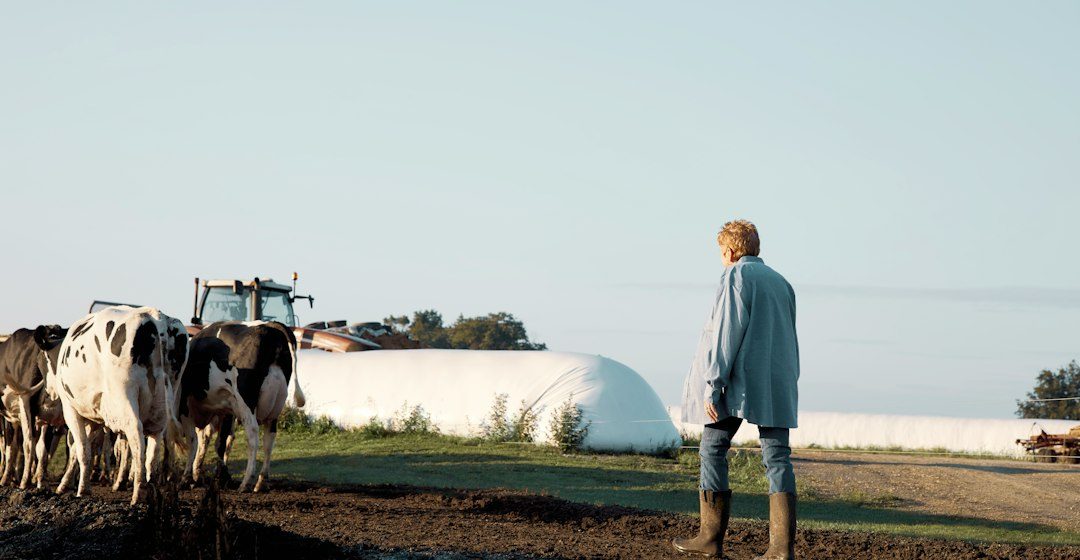
Sources: Pennsylvania General Assembly, Senate Bill 481 / Act 119 of 2026; Act 119 bill text (PDF). Illustrative photo by Portraits of Modern Dairy via Unsplash.